Ask any tiling contractor where the margin on a job actually lives, and the answer is never the tile or the adhesive. It is the labour. Every extra hour on site — hauling materials up stairs, cutting boards with power tools, cleaning up dust, coordinating a second pair of hands — chips directly away from the bottom line.
That is why the rise of XPS tile backer boards has been one of the most quietly consequential shifts in the tiling trade over the last decade. The material does not just perform better than the cement boards it replaces. It changes how installation itself works — and the arithmetic of a typical bathroom or wet room job changes with it.
Here is a breakdown of exactly where the savings come from, and why contractors who switch rarely go back.
The True Cost of a Traditional Backer Board Install
Before looking at what XPS solves, it is worth being honest about what traditional cement-based backer boards actually cost on site. The headline price per square metre tells only part of the story.
A standard cement board installation involves heavy sheets that typically need two installers to move and position safely. Cutting requires a score-and-snap for straight cuts but usually a power tool — angle grinder or circular saw with a diamond blade — for any complex work. That means dust. A lot of dust. Dust that has to be contained, captured, and cleaned up. Dust that triggers silica exposure concerns and requires PPE. Dust that makes working in an occupied home difficult or impossible.
Add in the time to handle, lift, and fix the heavier boards, the waste generated by the harder-to-cut material, and the coordination cost of always needing two people on site, and the real installed cost is considerably higher than the material invoice suggests.
Score and Snap — the Single Biggest Time Saver
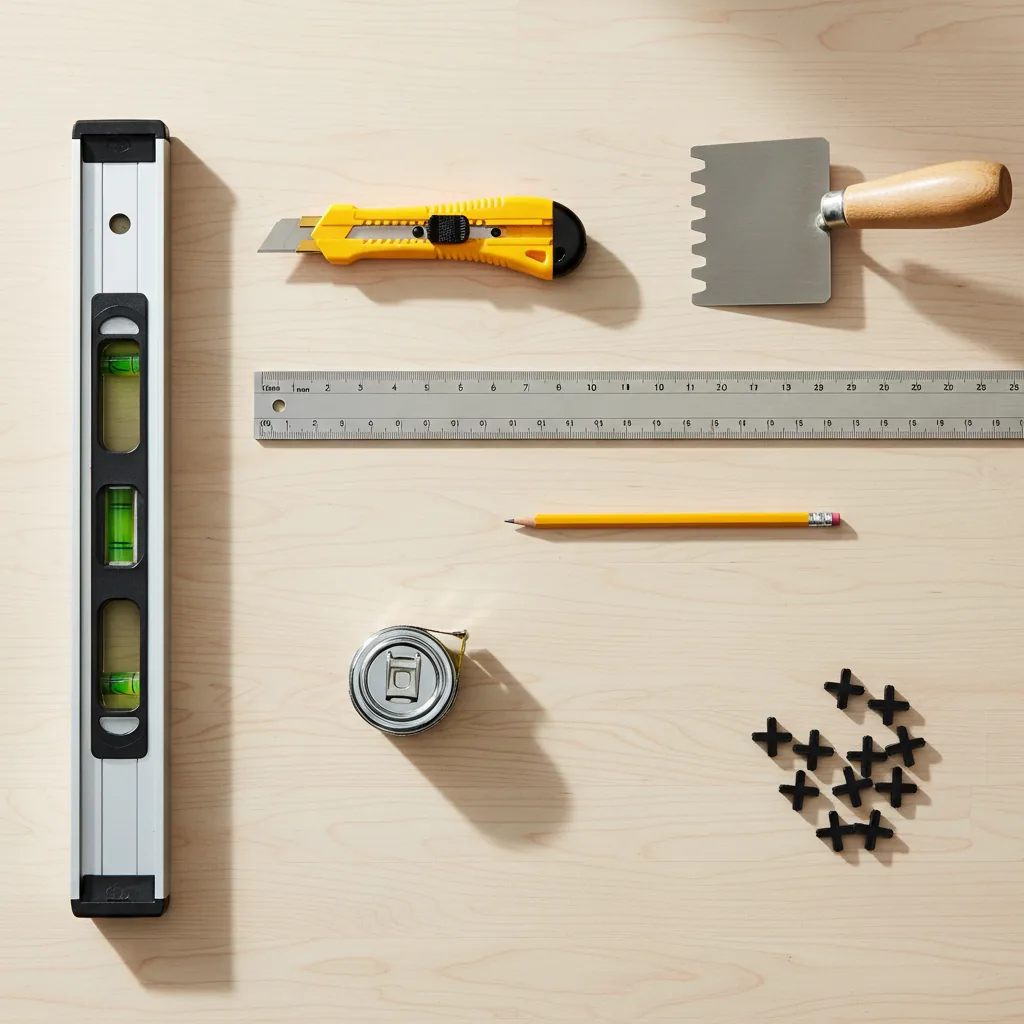
Insutile XPS boards are designed to be cut with nothing more than a sharp utility knife and a straight edge. Draw the line, score once or twice through the cement facing, and snap the board cleanly along the score line. The cut is straight, the edge is true, and the entire process takes seconds.
For the vast majority of cuts on a typical project — squaring boards to fit a wall, cutting around a doorway, shaping a floor panel — this is all that is needed. No power tools. No extension leads. No diamond blades. No dust extraction. No hearing protection.
For more complex cuts — around a toilet waste pipe, a wall-mounted mixer outlet, or an irregular shape — a simple keyhole saw or a handheld jigsaw will handle the work in a fraction of the time cement board requires.
The effect on a typical project is dramatic. Tasks that would have taken 15 to 20 minutes of setup and cutting are completed in three to five. Over the course of a full bathroom, that time saving compounds into hours.
85% Lighter — A Single-Person Install
Weight is the other half of the labour equation. A traditional 12.5mm cement backer board measuring 1200mm × 800mm weighs in the range of 20 to 25 kilograms. Moving it from van to first-floor bathroom requires two people and a clear route. Positioning it on a wall for fixing also requires two people — one to hold, one to fix.
Insutile XPS boards are up to 85 percent lighter than equivalent cement boards. The same board a two-person team would have struggled with can now be carried easily by a single installer, positioned against the wall, and held in place with a single hand while the other drives fixings.
What that unlocks on site is straightforward: one installer can handle the majority of a typical bathroom substrate job. For a small firm running multiple projects, that means a single technician can be deployed to a job that previously required two — effectively doubling the number of projects the team can progress at any one time.
For bigger jobs that still benefit from a two-person crew, the team moves faster because nobody is waiting on the other to finish lifting. Fatigue at the end of the day is significantly lower, which in turn reduces errors and rework.
Dust-Free Work in Occupied Homes
A huge proportion of bathroom renovations happen in homes that are still being lived in. Families keep using kitchens, bedrooms, and the second bathroom while work is underway. That reality alone has historically made cement board a poor fit — the dust it generates is incompatible with occupied spaces without extensive containment.
XPS boards solve this at source. Because the dominant cutting method is score-and-snap, the jobsite stays clean. Hallways do not need dust sheeting from top to bottom. Clients do not need to stay in a hotel for a week. The finished environment at the end of the day looks like a tiling job in progress, not a demolition site.
This matters for the client relationship as much as for the labour bill. Jobs that are clean and predictable get good reviews. Referrals follow. The calendar fills itself.
Fewer Fixings, Fewer Failures
The mechanical properties of XPS boards also reduce the number of fixings and the amount of associated labour each board requires. The material takes adhesive exceptionally well on both the substrate-facing side and the tile-facing side, meaning that in many wall applications, flexible adhesive alone provides sufficient bond.
Where mechanical fixings are specified — primarily for floor applications and larger wall panels — the pattern is typically simpler and more forgiving than cement board demands. Installers spend less time setting out fixings and less time correcting fixings that did not hold.
The cumulative effect is fewer steps per board, fewer materials to carry, and a more predictable installation flow.
Real-World Labour Cost Breakdown
Pulling the numbers together on a hypothetical standard 8-square-metre bathroom:
Traditional cement backer board approach
- Demolition and waste removal: 1 day, two installers
- Substrate installation: 1.5 days, two installers
- Total labour on substrate phase: 5 person-days
- Dust containment and cleanup: additional time sink
Insutile XPS approach
- No demolition if overboarding existing tiles is viable
- Substrate installation: 0.75 to 1 day, single installer for most of the work
- Total labour on substrate phase: approximately 1 to 2 person-days
- Minimal cleanup — materials are clean to handle and clean to cut
The labour saving across a typical project comes out between 40 and 60 percent. The exact number depends on the specifics of the job, but the direction is always the same: materially less time, less cost, less disruption.
That saving can be passed on to clients as a more competitive quote, retained as improved margin, or split between both depending on how the contractor chooses to compete. On busy calendars, the ability to finish jobs faster and move on to the next one is often the most valuable outcome of all.
Total Cost of Ownership
Labour savings are the most visible benefit of switching to XPS, but they are not the only one. The finished installation is waterproof, thermally insulating, and structurally stable for decades. Callbacks for moisture-related failure — the single most common reason a tiling contractor gets dragged back to an old project — effectively disappear. Warranty costs drop. Reputation strengthens. Repeat work follows.
When contractors benchmark total cost over a five-year window rather than on the single-project invoice, the gap between XPS and traditional cement boards widens further in XPS's favour.
Making the Switch
For a contractor considering the switch, the transition is unusually straightforward. The tools needed are already in the van. The installation principles — setting out, cutting, fixing, sealing joints — map one-for-one onto existing workflows. A short familiarisation on a first project is typically all the upskilling required.
Insutile provides technical support, installation guides, and accessory kits specifically designed to make the transition painless. The full product range — Build Board, Flex Board, Angle Board, Shower Underlay, and the associated sealants and tapes — means the same supplier can cover every substrate challenge on a given project.
The math on labour is simple. The case for switching makes itself.
See installation specifications, technical details, and contractor support resources at insutile.com. For bulk pricing and trade accounts, contact our technical sales team.