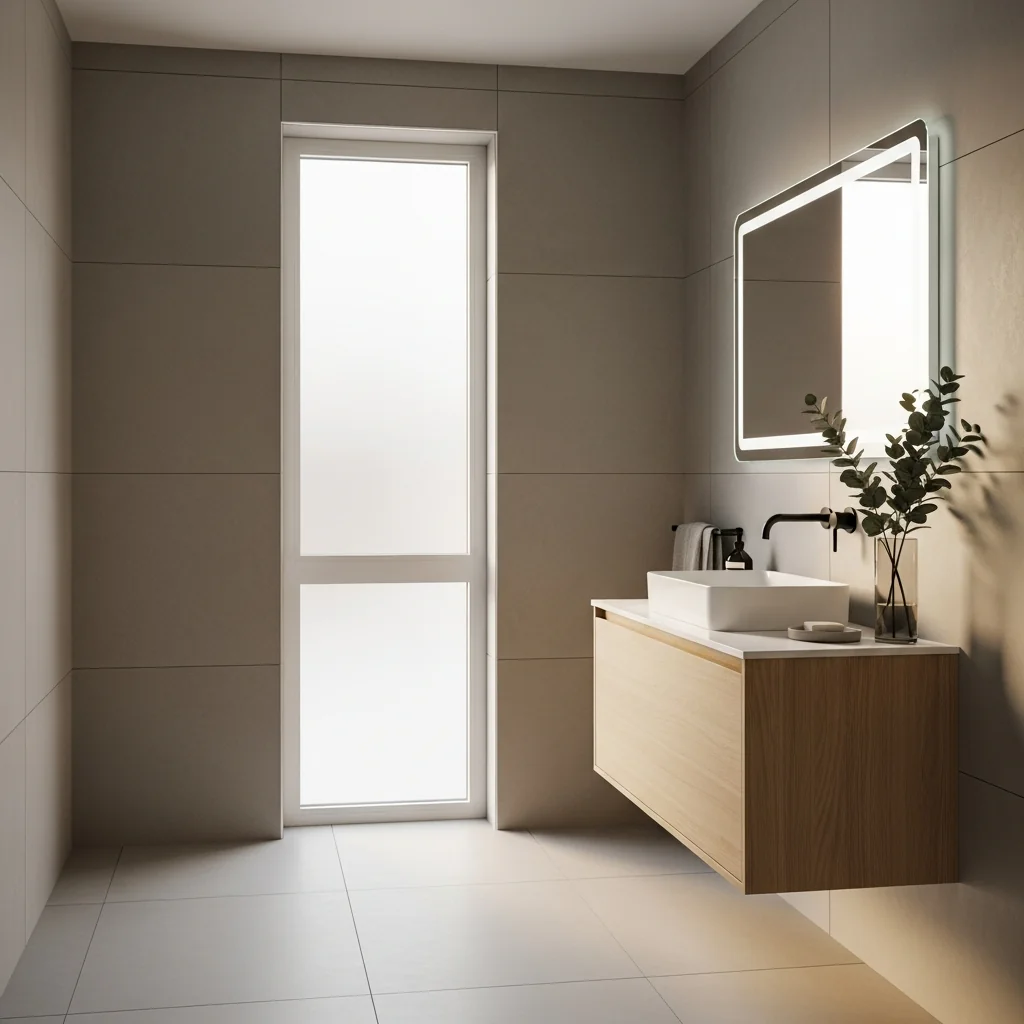
Tile backer board is one of those specification choices that quietly determines the outcome of an entire wet-room project. Get it right and the rest of the build flows: the boards cut cleanly, the waterproofing layer goes down quickly, the tiles bond to a flat substrate, and the finish lasts for decades. Get it wrong and every downstream task fights you a little harder.
For most of the last forty years, that choice meant cement-fibre boards — heavy, dusty, but reliable. Today, extruded polystyrene (XPS) tile backer boards have matured into a credible alternative across almost every application: bathrooms, wet rooms, kitchens, underfloor heating, and exterior tiled facades. So which is right for your next project?
This is the comparison every contractor, architect and serious homeowner asks for. Side-by-side. No marketing fog. Where XPS wins, where cement still earns its place, and where the difference is bigger than most spec sheets let on.
The Two Materials, in One Paragraph
Cement-fibre boards are made from Portland cement reinforced with fibreglass mesh and cellulose fibres, pressed into rigid panels. They are essentially a thin slab of waterproof concrete with a textured surface for tile adhesive. XPS tile backer boards are extruded polystyrene foam — a closed-cell rigid insulation core — sandwiched between two layers of polymer-modified cement coating with embedded fibreglass mesh. Same job, fundamentally different physics.
Weight: The Difference You Feel Before You Read a Spec Sheet
This is where the two materials part company most dramatically. A standard 1200 × 600 mm cement-fibre board at 12.5 mm thickness weighs in the region of 22 kilograms. The same size and thickness in Insutile XPS weighs roughly 3 kilograms. That is an 85 percent reduction.
What that means on site:
- One person can carry, position and fix a full sheet — no second pair of hands needed for a bathroom job.
- A van load of XPS holds three to four times the area of a van load of cement boards. Fewer trips, lower delivery cost.
- Fatigue across a working day drops sharply. Repetitive strain and lifting injuries are far less likely.
- Stairs, lofts and occupied homes become accessible projects rather than logistical headaches.
For renovators working in finished spaces, the weight difference alone often pays for the price difference between the two materials.
Waterproofing: Closed-Cell vs Porous
Cement boards are routinely described as waterproof. They are not — they are water-resistant. The cement matrix is porous, and capillary action will draw moisture through a cement panel given long enough exposure. That is why every reputable cement-board installation in a wet zone requires a separate liquid or sheet membrane on top of the board to actually keep water out of the structure behind.
XPS works differently. The closed-cell extruded polystyrene core has water absorption below 0.5 percent by volume. Water cannot wick through it because there is nowhere for the water to go — every cell is sealed. The cementitious facing provides the bond surface for tile adhesive while the foam core provides a permanent waterproof barrier.
The practical consequence: an Insutile XPS installation can serve as the waterproofing layer in its own right when sealed at joints with the appropriate tape and sealant. You skip a step that is essentially mandatory with cement.
Thermal Performance: Only One of Them Insulates
A cement-fibre board has, for practical purposes, no insulation value. Its thermal conductivity is similar to dense concrete — heat passes straight through it. If the wall behind it is uninsulated, the wall will feel cold to the touch and the room will lose heat through it.
XPS is fundamentally an insulation material — it is the same family of products used to insulate roofs, foundations and below-grade walls. Insutile XPS tile backer boards deliver thermal conductivity as low as 0.034 W/mK. Even a 12.5 mm board adds measurable insulation to a wall; a 30 or 50 mm board adds significant insulation. The room behind the tile feels warmer in winter and cooler in summer, and underfloor heating reaches target temperature faster because the heat reflects upward instead of bleeding into the structure.
If your project includes any thermal performance objective — energy rating uplift, condensation control, underfloor heating efficiency — XPS does work that cement simply cannot.
Cutting and Installation Speed
Cement boards are cut by scoring with a carbide blade and snapping, or by power-cutting with a diamond blade. The first method works but takes effort and the snap line is rougher than most people expect. The second is fast but generates fine respirable silica dust — never a small consideration on a domestic site, and increasingly a regulatory issue on commercial ones.
XPS boards score with an ordinary utility knife and snap by hand in seconds. There is no dust, no respirator requirement, no need to take cuts outside. A single installer can fit and trim a full bathroom of boards in a fraction of the time a cement install requires, because every cut is a knife scoreline rather than a power-tool operation.
Across a typical wet-room shell, the labour saving on cutting and handling alone is in the order of 40 to 50 percent.
Compressive Strength: The Cement Defender's Argument
The legitimate counter-argument for cement is compressive strength. Cement boards have very high compressive strength — they will take heavy point loads without deforming. This is why cement remains the default choice for industrial floors, commercial kitchens and other high-traffic environments.
XPS boards are also engineered for compressive load — the Insutile range is rated above 250 kPa, comfortably exceeding the requirements of any residential floor including those with stone tiles and underfloor heating. For domestic and most light commercial floors, the difference is academic. For warehouses, workshops and any application with forklift or pallet truck traffic, cement still wins.
Cost: Per Square Metre vs Per Finished Project
On a per-square-metre basis, XPS tile backer boards are typically more expensive than cement-fibre equivalents. Compared head-to-head as raw materials, cement is the cheaper line item.
Compared as a finished installation, the picture often inverts. Add the weight of the cement board to the labour cost. Add the separate waterproofing membrane that cement requires in wet zones. Add the dust extraction or post-cut clean-up. Add the disposal cost for cement off-cuts (heavy waste, charged by weight). Add the second installer the cement job needs because nobody fits 22 kg sheets solo.
Once the full project cost is in view, XPS is frequently the cheaper specification — and almost always the faster one. The right comparison is not "what does the board cost?" but "what does the finished, waterproofed, tiled wall cost?"
When Does Cement Still Make Sense?
An honest comparison admits the cases where the alternative wins. Specify cement-fibre boards when:
- The application involves heavy mechanical traffic — commercial kitchens, workshops, vehicle bays.
- You need exceptional impact resistance on a freestanding wall (although XPS in 20 mm or higher with mechanical fixings closes most of this gap).
- Local supply or trade familiarity makes cement the path of least resistance and the project does not benefit from XPS's specific advantages.
Outside those cases — which is to say, in most bathrooms, wet rooms, showers, kitchens, and underfloor-heated rooms — XPS is the better answer on weight, waterproofing, thermal performance, and installation speed simultaneously.
Where Insutile Fits
Insutile manufactures a complete XPS tile backer system designed to be specified as a single coherent solution rather than a single board:
- Build Board — the standard XPS tile backer board for walls, floors and ceilings.
- Flex Board — bendable XPS for curved walls, rounded showers and tight radii.
- Angle Board — pre-formed L-shaped boards for internal corners and pipe boxing.
- Shower Underlay — pre-sloped XPS bases for curbless walk-in showers and wet rooms.
- Accessories — sealants, mesh tape, washers and profiles that complete the system.
Every product is available in seven thicknesses from 4 mm to 50 mm, CE-marked, BBA-certified, and backed by a ten-year warranty. The full range is built around the same closed-cell XPS core, so a single specification covers the entire wet zone — wall, floor, corner, curve and shower base.
The Short Answer
For a residential bathroom, wet room, kitchen or underfloor-heated space in 2026, XPS is the better tile backer board. It is lighter, waterproof to the core, insulating, faster to cut, and cheaper once the full project is costed. Cement remains the right choice for heavy commercial floors and a handful of niche applications, but those are now the exceptions rather than the default.
The board behind the tile is the part that nobody sees — and the part that determines how long the room behind it lasts.
Comparing tile backer boards for a current project? Explore the full Insutile XPS system at insutile.com, request a free sample pack, or speak to our technical team for a specification tailored to your application.